News

Three ASVA member attractions have been chosen to take part in the British Museum’s nationwide programme celebrating the return of the Bayeux Tapestry to the UK in what has been described as a “once-in-a-generation” cultural event.

The Great Tapestry of Scotland in Galashiels, Dovecot Studios in Edinburgh and The Stirling Smith Art Gallery & Museum are among a select group of venues across the UK that will host exhibitions, events and educational activities linked to the British Museum’s major Bayeux Tapestry exhibition, running from September 2026 to July 2027.

The Bayeux Tapestry, one of the world’s most significant medieval artworks, will be displayed at the British Museum from 10 September 2026 to 11 July 2027. For the first time, visitors will be able to experience the tapestry displayed flat and in a continuous length, alongside important objects and artefacts connected to the Norman Conquest and medieval Britain.

Supporting this landmark exhibition will be a national programme of events exploring the tapestry’s history, legacy and continuing cultural influence. Scotland’s contribution will be led by three ASVA members, each offering a unique perspective on the enduring power of textile storytelling.

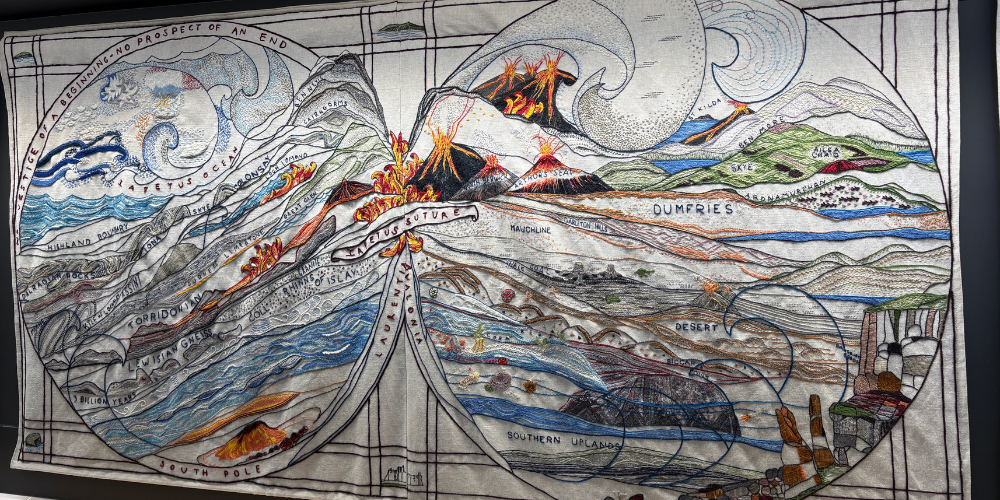
Great Tapestry of Scotland, Galashiels

The Great Tapestry of Scotland will present Two Nations: Two Tapestries, a year-long programme of exhibitions, workshops and storytelling activities beginning in September 2026. The programme will explore the historical links between Scotland and France, the influence of the Bayeux Tapestry on artist Andrew Crummy’s vision for the Great Tapestry of Scotland, and the shared experiences of the stitchers behind both works.

Educational activities linked to Scotland’s Curriculum for Excellence will also form part of the programme.

Sandy Maxwell-Forbes, Visitor Attraction Manager at Live Borders, said:

“We are thrilled that The Great Tapestry of Scotland has been selected as a Scottish partner in the British Museum’s national programme celebrating the Bayeux Tapestry.

“While separated by almost a thousand years, both works tell powerful stories of nationhood, identity and shared history, brought to life through the skill and dedication of communities of stitchers.”


Dovecot Studios, Edinburgh

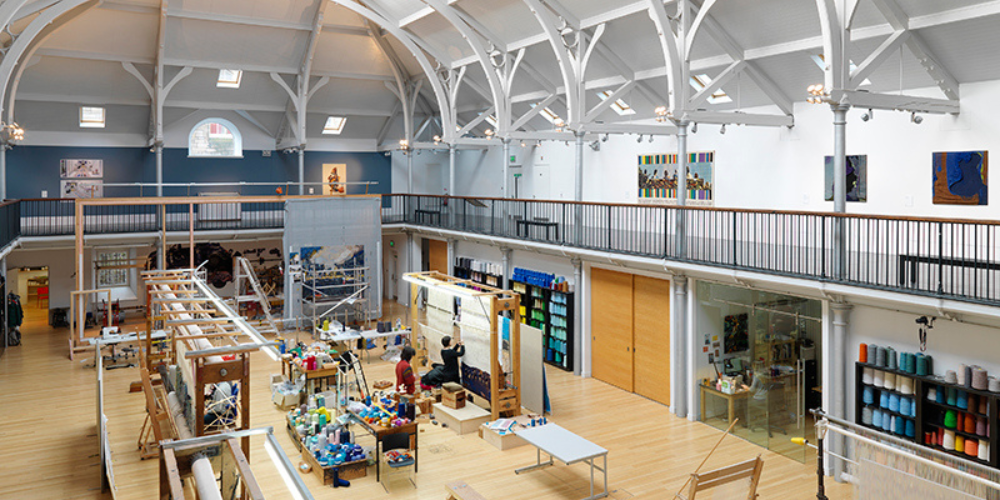
At Dovecot Studios, visitors will be able to experience a full-scale printed replica of the Bayeux Tapestry displayed across the studio’s renowned Tapestry Studio Viewing Balcony – the first time such a display has been shown in Scotland.

Alongside the replica, Dovecot’s weavers and volunteers are creating two new panels, one in embroidery and one in tapestry, providing visitors with a unique opportunity to compare the techniques and craftsmanship behind these historic textile traditions.

Heather Carroll, Curator and Exhibitions Manager at Dovecot Studios, said:

“As the UK’s longest-running tapestry studio, this is a natural collaboration for Dovecot, and we are delighted to be part of this special Scotland-wide programme, sharing our craft expertise while celebrating one of the world’s most remarkable textile artworks.”


The Stirling Smith Art Gallery & Museum

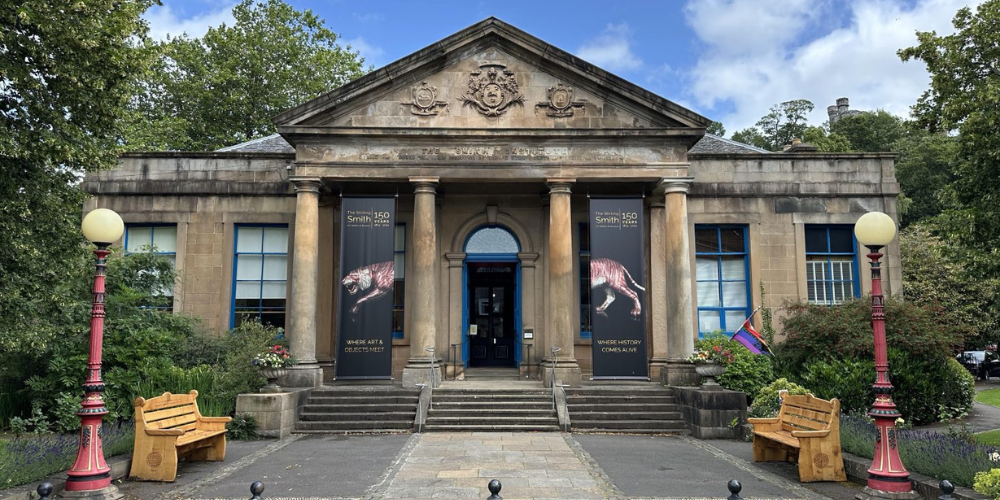
The Stirling Smith Art Gallery & Museum will host a major programme examining the enduring relevance of tapestry as an artistic and storytelling medium.

Visitors will be able to explore a digital exhibition of the Bayeux Tapestry alongside displays of work by acclaimed artist Andrew Crummy, including designs and completed panels from his Cancer Tapestry. The museum will also showcase the Roman panel from The Tapestry of Black Britons during Black History Month.

A programme of talks, community stitching activities and special events will accompany the exhibitions.

Kirstie Campbell, Assistant Director of The Smith, said:

“From the Bayeux Tapestry’s medieval chronicle to contemporary community-stitched works, tapestry remains a uniquely compelling art form. What makes it so special is its ability to connect people – not only across centuries, but right now, in the same room, around the same cloth.”


Showcasing Scotland’s Textile Storytelling

The involvement of these three ASVA members highlights Scotland’s significant contribution to the tradition of textile storytelling and community heritage projects. Together, their programmes will demonstrate how the legacy of the Bayeux Tapestry continues to inspire contemporary artists, makers and communities, while creating new opportunities for audiences across Scotland to engage with one of history’s most celebrated works of art.

Further details about the British Museum exhibition and associated national programme will be announced over the coming months.

Insights Strategy & Marketing Exchange

The presentation explored how Dovecot Studios delivered IKEA Museum’s first touring exhibition outside Sweden. The exhibition showcased 180 textile patterns and attracted more than 40,000 visitors, generating extensive media coverage.

Key themes discussed included:

  • Building partnerships with major global brands and navigating complex approval processes.
  • Managing licensing, copyright and brand restrictions while maintaining creativity and audience appeal.
  • Delivering integrated marketing campaigns, including media partnerships, influencer engagement and outdoor marketing activity.
  • Measuring return on investment and evaluating the impact of major exhibitions.
  • The growing importance of AI search and Generative Engine Optimisation (GEO), with discussion around how attractions can improve their discoverability through AI tools.
  • Strategies for engaging local audiences, including geo-targeted advertising, transport advertising, community partnerships, competitions and collaborative campaigns.

The discussion that followed provided valuable insights from members across the sector, including experiences working with major brands such as Aardman and Mattel, as well as practical examples of local audience development.

Watch the recording: www.asva.co.uk/dashboard


What’s Next in Tech for Visitor Attractions

The session featured Josh Ryan-Saha, who explored how AI is changing the way visitors discover attractions online, covering topics such as AI-powered search, agentic AI, and practical examples of AI being used across the tourism and visitor attraction sector. Josh also discussed the growing importance of ensuring attraction websites are visible and understandable to AI platforms.

We also heard from Andrew Johnson and Claire Riddoch from Camera Obscura, who shared their experience of improving the attraction’s website visibility and performance. Following an independent audit, they identified a number of technical issues affecting discoverability and search rankings. Through a programme of website improvements and the introduction of an AI chatbot, Camera Obscura achieved a 69% increase in website sessions, highlighting the importance of regularly reviewing website performance and AI readiness.

Watch the recording: www.asva.co.uk/dashboard


ASVA Visitor Experience & Engagement Ideas Exchange

The session featured a case study from Christina Dobbie from Glen Garioch Distillery, who shared how her team has developed an award-winning visitor experience through a focus on people, authenticity and collaboration.

Christina spoke about the importance of creating a warm welcome, investing in staff training and ensuring visitors feel valued as individuals rather than simply part of a tour group. She also shared examples of how memorable experiences can be created through thoughtful, low-cost enhancements, authentic storytelling and opportunities that help visitors connect more deeply with a place and its heritage.

The discussion explored the growing demand for premium and bespoke experiences, with visitors increasingly seeking exclusive access, behind-the-scenes opportunities and more personalised experiences. There was also valuable conversation around the role of local partnerships, with examples of how collaboration with accommodation providers, food and drink businesses, tourism organisations and other local partners can enhance the visitor offer while supporting the wider destination.

Accessibility and inclusivity were highlighted as important considerations, alongside the value of continually reviewing and refining the visitor journey to ensure guests feel welcomed, engaged and valued throughout their visit.

A recurring message from the session was that outstanding visitor experiences are often built through people, partnerships and creativity rather than large budgets, and that even small changes can have a significant impact on how visitors remember and talk about an attraction.

Watch the recording: www.asva.co.uk/dashboard


A new temporary VAT reduction aimed at supporting family attractions, activities and restaurants during the summer holidays is set to come into effect across the UK on 25 June. However, new industry research suggests the majority of Scottish attractions may see little direct benefit from the scheme.

The UK Government’s Great British Summer Savings Scheme will reduce VAT from 20% to 5% on a range of eligible family-focused admissions and children’s meals between 25 June and 1 September 2026.

The reduced VAT rate applies to children’s meals served in restaurants, children’s and family tickets for cinemas, theatres, exhibitions and shows, as well as admission tickets for attractions including museums, galleries, zoos, adventure parks, soft play centres, heritage sites, nature reserves and botanical gardens.

However, a survey of ASVA members shows that many operators face challenges in determining whether they can benefit from the scheme.

Limited impact across the sector

ASVA member survey data summary:

  • 45 attractions responded, only 17 (38 %) expect the VAT reduction to be relevant to them
  • Only 10 respondents (22% of the total responses) currently plan to pass the saving to visitors, and 7 of those eligible are unsure
  • 24 respondents (53 %) say the change does not apply to them, mainly because admissions are VAT-exempt, children already enter free, or their offer is adult-focused.
  • 4 respondents (9 %) are still assessing eligibility.

Complexity behind the headlines

Michael Golding, ASVA CEO, said the headline VAT reduction masks a much more complicated reality for operators.

While the reduction is welcome for businesses that can benefit, many attractions are either ineligible or face significant operational and financial considerations before making any changes.

Issues such as Gift Aid implications, ticketing systems, finance processes, visitor communications and operational planning are all influencing decision-making.

One attraction surveyed estimates it could lose 37p in Gift Aid income for every adult ticket sold if it implements the VAT change, creating a complex financial balancing act despite the lower tax rate.

For some organisations, retaining the VAT saving rather than reducing prices may provide valuable cashflow support and strengthen long-term financial resilience.

Key considerations for attractions

ASVA is encouraging attractions to carefully evaluate several factors before implementing any changes:

  • Confirm eligibility across admissions, packages and catering offers.
  • Model the financial impact, including revenue forecasts, visitor demand and Gift Aid implications.
  • Assess cashflow benefits and longer-term sustainability.
  • Review systems and processes, including tax code updates, refunds and ticketing platforms.
  • Plan operational changes, such as signage, websites, marketing materials and advance booking communications.
  • Train staff to ensure consistent messaging and understanding of the changes.

Sector-wide impact expected to be modest

With fewer than four in ten attractions expecting the VAT reduction to apply to them, ASVA believes the overall impact across Scotland’s visitor attraction sector is likely to be limited.

The timing of the scheme also coincides with one of the busiest periods of the year for attractions, when demand is already typically strong.

While some operators may benefit from improved cashflow or the ability to offer lower prices to visitors, many businesses face a challenging and fast-moving implementation process ahead of the summer holiday season.

As the 25 June launch date approaches, attractions across Scotland continue to assess whether the temporary measure represents an opportunity, a risk, or simply another layer of complexity during the peak tourism season.

Many attractions will have seen VisitScotland’s recent reminder regarding the removal of former Quality Assurance Scheme signage and references.

As VisitScotland’s Quality Assurance Scheme concluded in 2025, businesses are now required to remove or cover references to QA awards across physical and digital materials. This includes plaques, window stickers, websites, marketing collateral and other promotional materials.


For many attractions, the retirement of the previous scheme created a gap in the sector. Independent quality assessment has long played an important role in helping attractions benchmark performance, gain valuable external feedback and provide visitors with confidence in the quality of their experience.


In response to this need, ASVA developed the ASVA Quality Scheme; a not-for-profit, sector-led programme designed specifically for Scottish visitor attractions, activities and experiences.


Created by the sector, for the sector, the scheme combines independent assessment, star grading, detailed feedback and ongoing support from experienced Quality Advisors. Importantly, it has been designed around the realities of operating visitor attractions today and informed by research into what visitors value most.


Since launch, more than 230 attractions across Scotland have joined the scheme, including national icons, independent attractions and emerging visitor experiences.


For attractions removing former VisitScotland Quality Assurance signage, the ASVA Quality Scheme offers an opportunity to continue demonstrating a commitment to quality through an independent, nationally recognised assessment programme tailored specifically to the attractions sector.


If you would like to find out more about the ASVA Quality Scheme, our team would be delighted to arrange an informal conversation and answer any questions you may have. Contact the ASVA Quality Scheme team.

If you have any queries with regards to the VisitScotland QA collateral, please contact their team on business.support@visitscotland.com.

ASVA welcomes the Scottish Government’s decision to include tourism within a dedicated Cabinet Secretary portfolio, recognising the vital contribution Scotland’s tourism and visitor attraction sector makes to the economy, communities and the country’s international reputation.

We congratulate Stephen Flynn MSP on his appointment as Cabinet Secretary for the Economy, Tourism and Transport, and look forward to working constructively with him and his ministerial colleagues to support the continued growth and success of Scotland’s visitor attractions sector.

The creation of a named tourism role provides an important opportunity to strengthen engagement with the industry and ensure the challenges and opportunities facing tourism businesses are represented at the highest level of government. We also congratulate Tom Arthur MSP on his appointment as Minister for Business and Fair Work.

ASVA supports the STA’s priorities for the first 100 days, first year and full parliamentary term, which set out key actions needed to strengthen Scotland’s tourism and hospitality industry. We look forward to working with government, the STA and industry partners to help deliver these ambitions and ensure Scotland remains a world-class destination for visitors.

Since the closure of the previous national quality scheme, more than 230 attractions across Scotland have joined the ASVA Quality Scheme.

That level of engagement shows the continued importance of independent quality assessment within the visitor attraction sector, but also reflects a wider conversation about what quality means for attractions today.

Across Scotland, attractions are operating in an increasingly challenging environment. Visitor expectations continue to increase, operational costs are rising, and businesses are balancing commercial realities with the desire to deliver memorable experiences.

At the same time, visitors are becoming more discerning. Quality is no longer judged solely on the core attraction itself, but on the entire visitor journey, from the booking process and welcome, to interpretation, accessibility, retail, catering and customer service.

In this environment, attractions need more than accreditation, what is really helpful is practical insights, external perspective and constructive support that helps them continue improving and evolving.

A scheme created by the sector, for the sector

The ASVA Quality Scheme was developed specifically for Scottish attractions.

Importantly, it was designed in direct response to feedback from the industry itself. Attractions wanted a quality scheme that reflected the realities of operating within the visitor attraction sector, rather than a broader hospitality-focused assessment model.

The scheme is also informed by ASVA’s visitor research, ensuring that the grading criteria are shaped around what visitors themselves value most.

As a not-for-profit initiative, the focus is firmly on delivering value to the sector through practical support, benchmarking, development opportunities and continuous improvement.

More than an accreditation

For many participating attractions, one of the most valuable aspects of the scheme is the opportunity to gain an independent perspective on the visitor experience.

As part of the process, one of ASVA’s Quality Advisors visits the attraction as an incognito visitor and evaluates the experience against visitor expectations and industry best practice.

Following the visit, attractions receive:

  • Verbal feedback on the day
  • A detailed written report
  • Scoring and benchmarking insights
  • Practical recommendations for improvements
  • Physical and digital star signage
  • Ongoing access to the Quality Team for support and advice

The process is designed to be supportive and a tool for further development.

The aim is not to change what makes an attraction distinctive, but to help organisations identify strengths, recognise opportunities for improvement and continue enhancing the visitor experience while retaining their own individuality and character.

Supporting staff engagement and team building

Many attractions also report that the assessment process has a positive impact internally.

Preparing for a grading visit often encourages teams to reflect on the visitor experience together, celebrate successes and identify areas for improvement as a group. For some organisations, the process can provide an important morale boost and create renewed focus around customer service and operational standards.

The scheme also creates opportunities for attractions to benchmark themselves against industry peers and share best practice across the wider sector.

What attractions are saying

Participating attractions have highlighted the value of independent assessment, sector-specific expertise and constructive feedback.

Royal Yacht Britannia commented:

At Britannia we have built our reputation on delivering a world-class experience, and I do not believe you can achieve this without an independent assessor taking a critical view of your experience and benchmarking you against the best.

Dundreggan also emphasised the value of guidance and support:

As a relatively new attraction, we appreciate the support and guidance it will provide, to ensure we are on the right track to delivering visitor experiences to the highest standard.”

Other attractions have highlighted the benefits of peer collaboration and being part of a collective commitment to raising standards across Scotland’s tourism sector.

Strengthening Scotland’s visitor experience

Ultimately, the ASVA Quality Scheme represents more than individual star gradings.

It reflects a wider commitment by Scotland’s attractions to delivering consistently high-quality experiences that encourage first-time visits, repeat visits and positive recommendations.

By working together to maintain and improve standards across the sector, attractions contribute to Scotland’s wider reputation as a welcoming, professional and world-class destination.

Find out more

The ASVA Quality Scheme is open to both ASVA members and non-members, with pricing for ASVA members starting from £250 and options for annual or biennial visits.

Scotland’s visitor attractions showed resilience throughout 2025, with new figures suggesting ASVA member attractions are continuing to outperform wider industry trends despite ongoing economic pressures.

The latest Scottish Visitor Attraction Report, published by the Association of Scottish Visitor Attractions (ASVA) in partnership with the Moffat Centre at Glasgow Caledonian University, revealed that Scotland’s attractions recorded 39.4 million visits in 2025, a marginal decline of just 0.2% compared with 2024.

However, the report indicates that ASVA member attractions remain comparatively resilient, with paid attractions recording a 1.6% increase in visits year-on-year, though free attractions saw a 1.4% decline. Industry leaders say the figures reflect the strength of professional visitor attraction operators that continue to invest in visitor experience, digital engagement and diversified revenue streams.

Free attractions continued to dominate overall footfall, accounting for almost 58% of all visits in 2025, while attractions welcoming more than 100,000 annual visitors generated over half of all reported visits nationwide.

Edinburgh Castle retained its position as Scotland’s most visited paid attraction, welcoming more than two million visitors in 2025, while the National Museum of Scotland remained the country’s leading free attraction with over 2.3 million visits.

The report also highlights strong performance in visitor spending among attractions with established commercial operations. Average visitor spend reached £9.52 per visit on admissions, £3.41 on retail and £3.43 on catering, underlining the growing importance of secondary spend to attraction sustainability.

Digital engagement also remained a major strength across the sector. More than 94% of attractions reported having an active social media presence, while over 60% said they update their websites or social media channels daily.

Seasonality continues to shape the sector, with almost two-thirds of visits taking place between April and September. August remained the busiest month of the year, accounting for more than 13% of annual visits.

The findings also showed continued strength in Scotland’s cultural and heritage offering. Museums and galleries, outdoor attractions and historic sites remained among the country’s strongest-performing categories, while distilleries and breweries continued to attract adult audiences and strong international interest.

The results demonstrate the long-term value of collaboration, professional standards and continued investment across the visitor attraction sector.

The ASVA Scottish Visitor Attraction Report is based on responses from 363 attractions across Scotland, representing a response rate of more than 90%.

The full report can be accessed in the member’s area.

We are inviting ideas for this year’s ASVA Conference, taking place on Thursday 12 November 2026 at Perth Concert Hall.

With 400+ attractions professionals from across Scotland attending, this is your opportunity to share your story, showcase your work, and contribute to the conversations shaping our industry.

We’re currently welcoming nominations and suggestions:

✨ Speaker nominations (yourself or someone else)
Please include:
– name, organisation and role
– a one-sentence theme
– a short (3 sentence) overview of the subject

✨ Themes
What’s the one thing you’d most like to hear about this year?

✨ Something special
Last year we had the wonderful Commonwealth Games Mascot Finnie join us live. She brought something special to the day. So, we’re inviting out of the box ideas for this year. Get creative and share your thoughts!

Send your ideas to Michael Golding michael@asva.co.uk

There will be one further call for speakers before nominations close. All submissions will be carefully considered, with final decisions expected by mid-July.

Thank you in advance for your ideas, creativity, and support in helping us deliver the very best ASVA Conference yet.

Thanks to Timberplay for providing this insightful article exploring the importance of risky play in children’s development. Drawing on their expertise in designing engaging, challenging play environments, Timberplay highlight how carefully considered opportunities for risk can help children build confidence, resilience and essential life skills.


We want the children in our lives to be confident, resilient, self-aware people who can manage life, with ease.

At Timberplay, we design playgrounds that create opportunities for children to experience risk and challenge while buidling confidence in managing it safely. Exposure to risky play from an early age supports children to grow into more confident, resilient individuals.

Risky play is understood to improve mental and physical health, prevent obesity, mitigate anxiety, improve balance and spatial awareness.

Adults naturally want to protect children, but this instinct must be balanced with an understanding of how valuable it is for children to make mistakes, slip up and even fail. A well designed playspace should offer far more than a single whizz down a slide, or a simple up and down to get up higher. It should have a range of open ended opportunities to enable problem solving, challenge, risk and collaboration. Through these experiences, children learn how to protect themselves, even if there are a few bruises along the way.

While we can’t predict the world children will grow up to navigate, we can support their development from birth through to adulthood. By offering opportunities that build resilience and adaptability, play helps children develop the independent skills they will need to thrive in an uncertain future.

Play is essential to development.

Risk is an essential part of play.

As an organisation we actively advocate for children’s right to take risks because research and experience show that risky play supports both mental and physical health. It helps prevent obesity, reduce anxiety, improve balance and increase spatial awareness.


You can see this drive for challenge in children every day. Not only when they climb higher or run faster, but in the small moments too, when stepping only on kerbstones, walking backwards, turning the familiar into something more demanding. Children instinctively seek to make the mundane more challenging, more risky and ultimately, more fun!


Without the time, space and support to engage in this type of play, other risks emerge. That’s why, when creating playgrounds in a wide range of settings, we work closely with clients to consider the value of the play being offered. Not to tick a box on a masterplan or enhance a brochure, but to create playspaces that genuinely enrich children’s lives and become places families want to return to, again and again.


To find out more about Timberplay you can visit our website here: www.timberplay.com or email us info@timberplay.com with any enquiries. Do follow us on social media where we regularly share our podcast Play Attention which hosts conversations with
Thinkers and changemakers, shaping the future of play.


Artificial intelligence and its impact on visitor attractions emerged as one of the most discussed topics at ASVA’s recent “Insights, Strategy and Marketing Member Exchange”, with members raising a wide range of questions about how rapidly changing technology is affecting marketing, visibility and visitor behaviour.

Discussions highlighted growing uncertainty across the sector, particularly around how AI-powered search and trip-planning tools are changing the way visitors discover attractions online.

The shift towards AI

Following the session, ASVA explored wider industry thinking, including a recent article in “Tourism Review” examining the rise of “agentic commerce”,  where AI tools  recommend and plan travel experiences on behalf of users rather than directing them through traditional search results.

The article highlights a significant shift: attractions are no longer discovered solely through Google searches or destination websites, but are increasingly being recommended by AI systems that curate experiences automatically.

This means visibility online is no longer just about search rankings, it is about how clearly and consistently attractions present their information across the digital ecosystem.

What attractions can do now

Key practical actions identified include:

  • Keep information accurate and up to date – Ensure websites, Google Business Profiles and listings clearly display opening hours, pricing and descriptions.
  • Build strong reviews and reputation – Recent, high-quality reviews on platforms such as Google and TripAdvisor help AI tools identify trusted experiences.
  • Be clear about your audience – Clearly describe who your attraction is for e.g. families, cultural visitors or short visits, so AI tools can match experiences to user needs.
  • Maintain consistency across platforms – Information should align across websites, booking platforms and destination listings such as VisitScotland.
  • Answer common visitor questions – Content explaining what visitors can expect, practical tips or suitability (such as rainy-day visits) helps AI systems understand and recommend your offer.
  • Make booking simple – AI tools favour experiences that are easy to access, with clear information and straightforward booking journeys.

In short, clarity, consistency and credibility are becoming essential for remaining visible in an AI-driven booking landscape.

New ASVA Industry Insight Events

In response to strong member interest and the volume of questions raised, ASVA is now delivering two free online Industry Insight webinars designed to help attractions understand and respond to these changes.

AI Discovery Is Here – What Does That Mean for Your Attraction Online

Date: 6 May
Time: 10:30 – 11:30
Online | Free to ASVA Members

Visitor attractions have spent years building websites designed to rank well on Google, but AI-powered search tools such as ChatGPT, Google’s AI Overviews and Perplexity are increasingly answering visitor questions directly, often without sending users to websites.

In this practical session, Neil Lewin, Managing Director of Semantic, will share a clear and actionable playbook for improving visibility in AI-generated search results.

Drawing on real-world experience working with attractions including Real Mary King’s Close, Twycross Zoo, Brighton Palace Pier, Silverstone Museum and The Crystal Maze, the session will cover:

Book your space now >>

Turning Screens into Ticket Sales: The Promise and Perils of AI-Powered Creative on Paid Media Platforms

Date: 19 May
Time: 10:30 – 11:30
Online | Free to ASVA Members

This Industry Insight webinar, delivered by specialist paid media agency The Media Shop, will explore how AI is transforming paid advertising and what this means for visitor attractions across Scotland.

The session will unpack emerging AI-powered creative tools, opportunities for improving campaign performance, and the potential risks attractions should understand as platforms evolve.

Book your space now >>

 Supporting members through digital change

The new webinars reflect ASVA’s commitment to helping members navigate rapid digital change with practical, sector-specific guidance.

As AI continues to reshape how visitors plan and book experiences, understanding how attractions are discovered online is becoming an essential part of marketing strategy.

Both sessions are free to ASVA members, with registration now open via the ASVA events page.

Earlier this month, UKInbound and a coalition of tourism, travel, aviation, leisure, events and hospitality organisations wrote to the Home Secretary to raise concerns about planned increases to visa and Electronic Travel Authorisation (ETA) fees. The letter was cosigned by ASVA.  It highlighted that a two-year visitor visa could rise by 40% over four years, with ETAs doubling since their introduction in 2023. The industry is concerned that these increases risk undermining the UK’s competitiveness as a visitor destination, could reduce international visitor spend, and would place further pressure on hospitality, tourism and high street businesses.

In its reply, the UK Government stated that immigration fees are kept under regular review and that there is currently limited evidence showing fee levels have significantly affected tourism demand. The Government acknowledged concerns around international competitiveness and confirmed that an impact assessment will be published alongside legislation introducing the proposed increases.

The Minister for Migration & Citizenship highlighted that fees are set under the Immigration Act 2014 and are designed to reflect application processing costs as well as the wider operation of the UK’s migration and borders system. The Government also emphasised that the UK continues to welcome international visitors and noted that the ETA allows multiple visits over a two-year period and is designed to be quick and straightforward to obtain.

Tourism industry organisations continue to stress the importance of maintaining the UK’s competitiveness as an international destination and will monitor developments closely as further details emerge. They will continue to speak to the UK Government and voice their concerns about the impact on the industry, with evidence to rebut their claims.

Scotland doesn’t stop when it rains. However, there is a growing discussion around how we represent weather on apps and websites.  A simple rain icon on a weather app can have a signifcant impact on how people plan their day.  This is particularly relevant when it comes to deciding on a trip to a visitor attraction.

ASVA is supporting a growing call from attractions across the UK for a rethink in how daily weather forecasts are displayed on apps and summary screens. The issue isn’t forecast accuracy, but how weather information is sometimes over-simplified, particularly when people often only look at the summary icon. Days can be labelled as “rainy” even when showers may last for only a short period, potentially discouraging visitors from heading out.

For Scotland’s visitor attractions, this issue is especially relevant. Lots of our experiences take place outdoors, across built attractions, heritage sites and natural environments. The sector already works hard to challenge long-standing myths about poor Scottish weather, and simplified forecast icons can unintentionally reinforce those messages.

A more balanced presentation of weather forecasts, including clearer information about timing, dry periods and daytime conditions, would help visitors make more informed decisions. Such changes would better reflect the reality that attractions across Scotland are ready to welcome visitors in a wide range of weather conditions.

ASVA believes this is an important conversation for the tourism and visitor attraction sector and is encouraging discussion across the industry.

Visitors can read more about the wider UK discussion here.